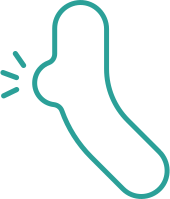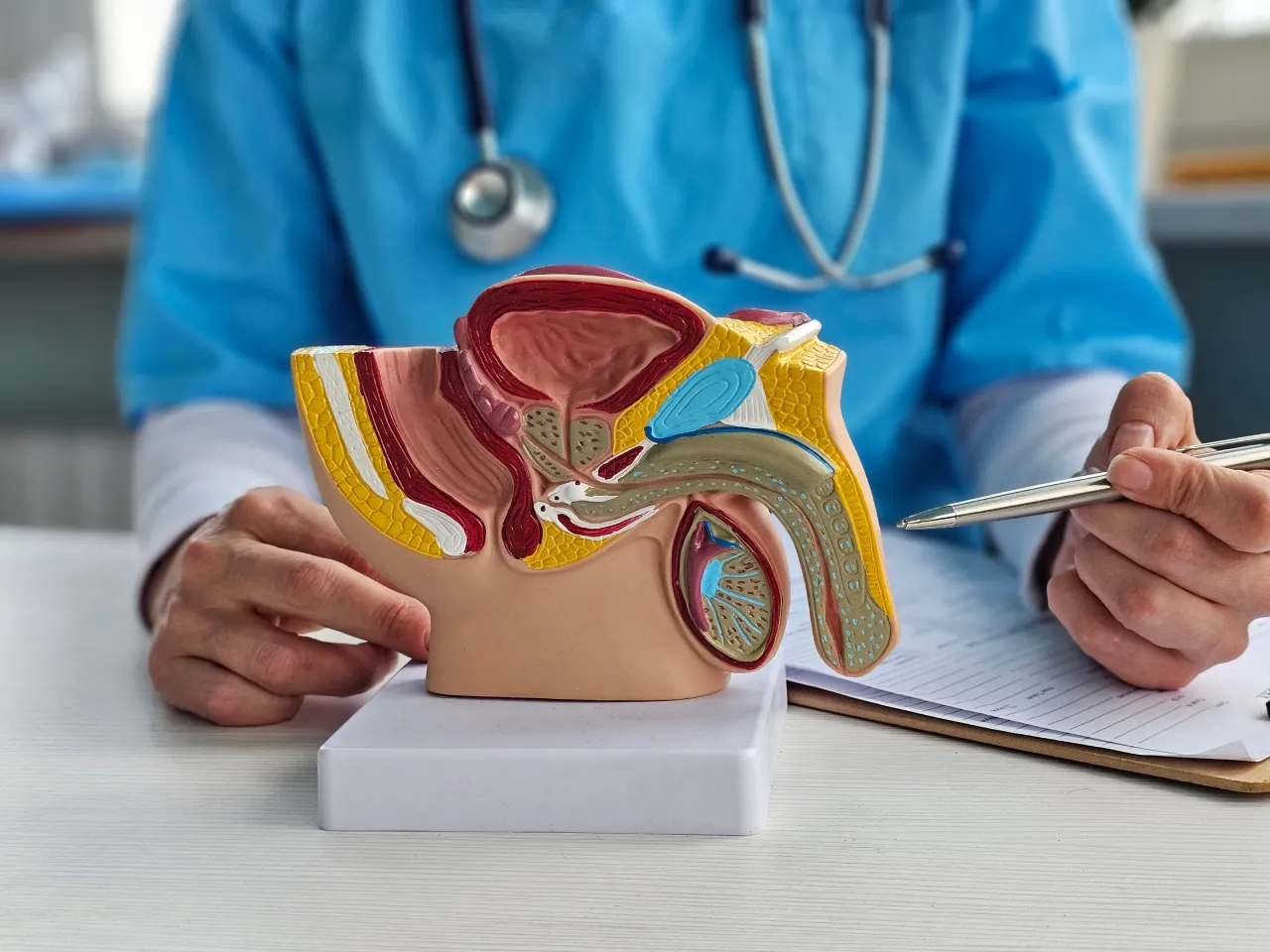
Peyronie's disease is characterized by the appearance of an abnormal curvature of the penis, accompanied in many cases by pain and difficulties during erection. These symptoms are associated with the formation of fibrous (scar) tissue plaques in the tunica albuginea, the layer that covers the corpora cavernosa of the penis.
As specialists in Peyronie's disease in Barcelona, we know that identifying the symptoms of Peyronie's disease early on can make a big difference in the progression and success of treatment.

Symptoms of Peyronie's disease: how to identify them
What are the first symptoms of Peyronie?
Pain during erection or at rest
Appearance of pain is one of the first symptoms of Peyronie’s disease. It can occur both during erection and at rest and is usually due to the initial inflammatory process or tension in the developing fibrous tissue.
Although this pain tends to decrease over time, its appearance is a warning sign that requires medical evaluation. Palpable plaque or nodule.
Appearance of a palpable plaque or nodule
Another characteristic symptom is the presence of a small plaque or nodule under the skin of the penis. This hardened area corresponds to scar tissue that alters the normal elasticity of the penis, causing it to become progressively curved. If you notice a hardened or irregular area, it is advisable to see a Peyronie’s disease specialist in Barcelona for an examination.
How do I know if I have Peyronie's disease?
As the disease progresses, the signs become more evident and can significantly affect the patient’s sexual function and self-esteem.
Penile curvature
Penile curvature is the most visible symptom of Peyronie’s disease. It can manifest upward, downward, or to one side, depending on the location of the fibrous plaque.
Some men also experience an hourglass-shaped deformity or penile shortening, which can make sexual intercourse difficult or impossible.
Emotional aspects: Peyronie's disease also affects self-esteem
In addition to physical symptoms, Peyronie’s disease can have a strong emotional impact. Anxiety, insecurity, and self-esteem issues are common, especially when curvature or erectile dysfunction interferes with sexual and relationship life.
Other common symptoms of Peyronie's disease
- Pain or discomfort during erection.
- Presence of one or more fibrous plaques.
- Difficulty maintaining a firm erection.
- Reduction in penis size or thickness.
- Emotional changes or anxiety about the appearance of the penis.
Erectile dysfunction and Peyronie's disease: are they related?
Difficulty maintaining a firm or lasting erection is another common symptom of Peyronie’s disease. This may be due to pain or to changes in blood flow and elasticity in the penis.
At our Peyronie’s clinic in Barcelona, we conduct a comprehensive assessment of each case to determine whether erectile dysfunction is related to curvature or other associated factors.
When should you see a Peyronie's disease specialist in Barcelona?
You should consult a doctor if you notice any of these symptoms:

Pain or curvature in the penis, even if mild.

A lump or plaque that wasn't there before.

Changes in the shape or size of the penis.

Difficulty achieving or maintaining an erection.
Early detection of Peyronie’s symptoms is key to its treatment. Seeing a Peyronie’s specialist in Barcelona at the first signs of curvature or pain can help control the disease and preserve sexual function.
Contact our Peyronie's disease specialists in Barcelona
Have you noticed curvature or pain in your penis and suspect it may be Peyronie’s disease?