
Incontinence meshes are an advanced and minimally invasive treatment for urinary incontinence. At Andrología Barcelona, Dr. Lluis Peri, a urologist, is an expert in their placement to address incontinence issues.
Suburethral Mesh - Treatment for Urinary Incontinence
What are mesh implants for urinary incontinence?
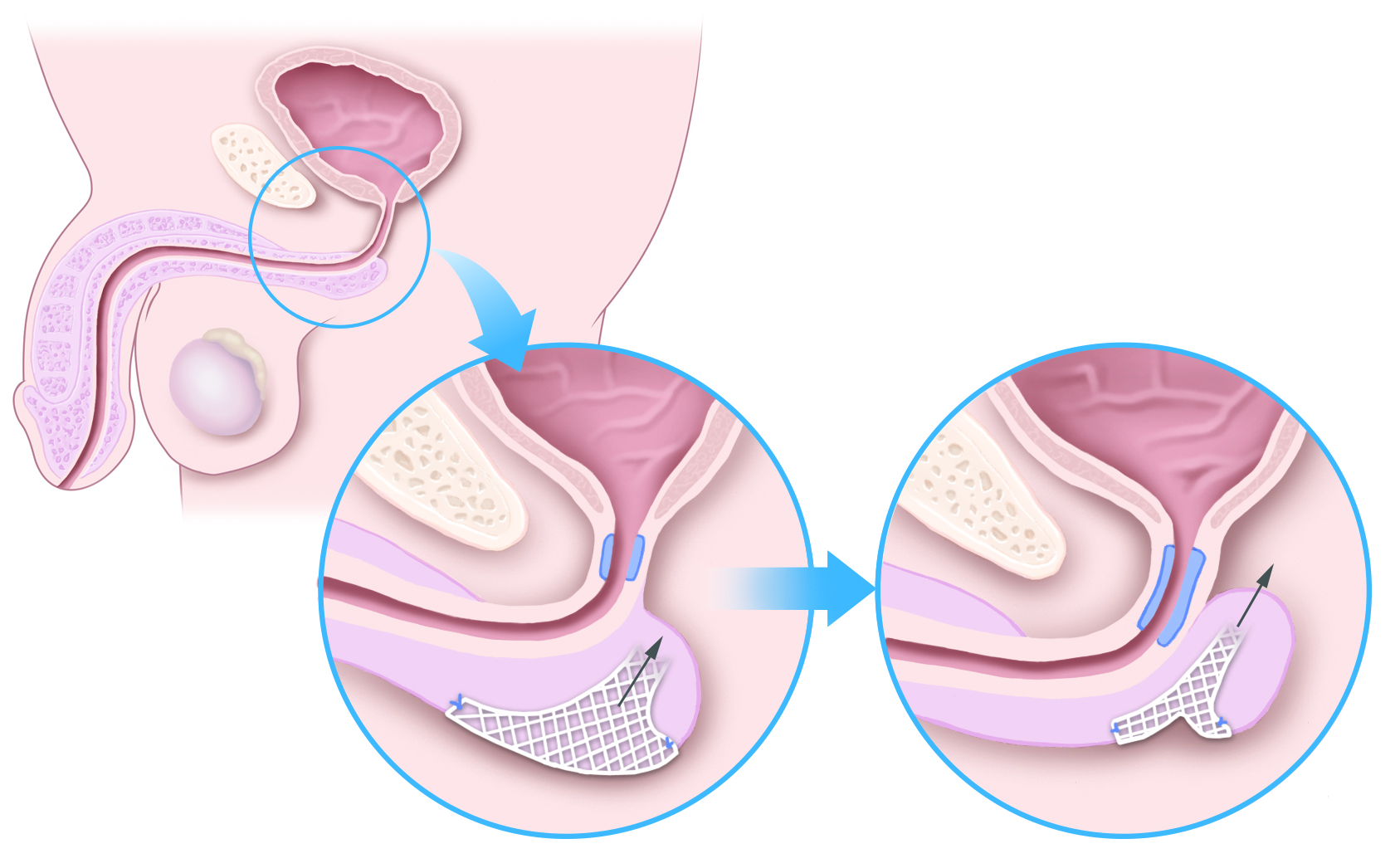
Suburethral mesh implants or slings are a minimally invasive treatment for stress urinary incontinence, both in men and women. In men, this condition typically arises after a surgical procedure involving the prostate or urethra. The use of a suburethral mesh is considered when, after pelvic floor rehabilitation, there are mild to moderate urine leaks.
In women, urinary incontinence is often secondary to childbirth, and it can appear months or even years after having a child. We diagnose stress incontinence through a physical examination, where we confirm the presence of a mobile urethra that opens during physical exertion. The placement of a suburethral sling is considered when urinary incontinence persists after pelvic floor rehabilitation.
What advantages does mesh treatment offer?
Minimally invasive treatment.
Procedure performed on an outpatient basis or with a 24-hour admission.
It is a treatment with an effectiveness rate of over 90%.
The duration of the mesh implants is over 10 years.
The results for urinary incontinence are immediate.
Frequently Asked Questions about incontinence mesh implants
What is the postoperative recovery like?
After the surgery, a urinary catheter is placed and removed the following day. Once proper bladder emptying is confirmed, the patient is discharged and a follow-up appointment is scheduled for 3-4 weeks later. During this visit, the healing process and the functional outcome of the surgical procedure are assessed. During the first month postoperatively, the patient should limit physical exertion to allow for proper healing.
Is it a painful procedure?
The placement of these devices is usually very well tolerated. There may be transient discomfort related to the incision, catheterization, or placement of the sling, but these are not common complaints. In a small number of patients, more intense pain may occur related to the passage of the sling through the tissue. In this case, specific treatment may be required for this symptom.
Is it the same treatment for men and women?
The type of device is very similar in both genders, but not identical. A sling is placed under the urethra and fixed through the obturator foramen. In men, the sling must be placed with tension, as its purpose is to actively reposition the urethra to restore continence. In women, the sling is placed without tension, as its goal is to prevent the involuntary opening of the urethra during physical exertion.
Do you need more information about incontinence mesh implants?
At Andrology Barcelona, we are experts in urinary incontinence and finding the treatment that best suits your personal circumstances.